
Christian

The Suffering Servant

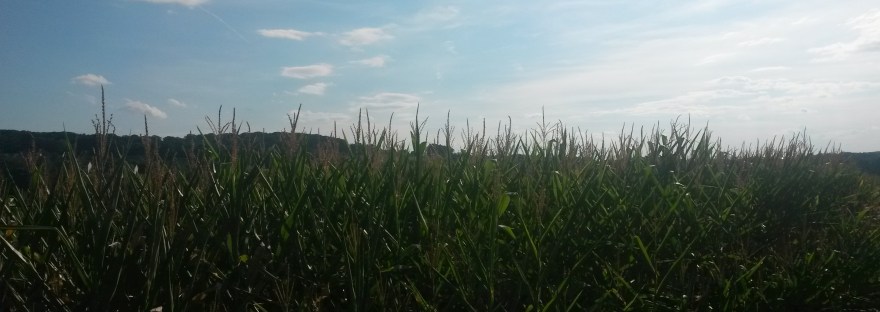
My husband and I attend a congregation that is quite active in community outreach. So, a few weeks ago, we were sitting in church and listening to an announcement about some upcoming  service projects, when one in particular caught my eye. An out-of-state farmer had generously offered up some of his produce to be given to our local food bank, and we were supposed to go and harvest it. I’ve had very minimal exposure to projects of this nature, and my natural inclination has always been to shy away from things I’m not experienced at, for fear of getting in the way. For some reason, though, it sounded like fun, so we signed up for last Saturday morning from 9:00 a.m. to 10:30 a.m.

As it is August, temperatures have been pretty high lately, so when I received the email advising us to wear long pants, long sleeves, boots, hats, and gloves, I was a little worried. I have a condition that prevents me from perspiring in heat as well as the average person can, so my body will kind of trap the heat—forcing my skin to turn a vibrant shade of lobster-red. Sort of funny, in a way, but I’ve always had to take extra precautions against hyperthermia. But as much as I considered how miserable it would be to wear warm clothes in the sweltering heat while picking corn for an hour and a half, I was also kind of grateful for the challenge. Anyone who knows me can tell you that I can’t stand challenge. I am perfectly content to admit that I would much rather have a stress-free life than a stress-filled life—and that I don’t feel much of a need these days to prove myself to other people. Still, I felt grateful.

By the time we’d arrived on Saturday morning, the temperature was already pushing 90 degrees. After leading us in a brief prayer, our group leader released us into the field—clad in our wintery apparel. It began easily enough. I felt energized, and it really didn’t require too much strength to pull the corn from its stalk. The hardest part for me was bending the stalks backward after I’d finished. I also had a little bit of trouble discerning the good ears/husks from the ones that should be left alone, so I kept asking my husband to judge for me when I couldn’t figure it out. He was nice about it for the most part, but eventually, he started getting irritable (he’s sensitive to heat, too!). It didn’t take long before I noticed that I was running out of breath. My steps were becoming more weighted down, and it was difficult to move. I put my hand on my chest, and my heart was just pounding. My body seemed to be begging me to stop and take a break, but all the while, there was this strange struggle happening in my mind. There was a part of me that wanted to acquiesce to my body’s signals—but then, there was this other part of me. It was telling me to feel the discomfort. Feel it, but keep going anyway. Feel it, and learn to perceive it as good. Feel it, and think of Me. Because if you can’t learn to endure in something so small, how will you ever endure in a circumstance that is truly harsh? How will you ever be one with Me?

The thought encouraged me onward for a little while longer. I came to a wall of thorns that separated me from the rest of the stalks, and I was so frustrated with the whiny pangs of my body compared to the resolute desire taking hold of my mind that I started pushing right into them. Every time I felt one of them prick my skin, I just pushed harder, trying to make it through to the other side. I didn’t even bother trying to avoid them. I didn’t want to avoid them.

About forty minutes in, we finally stopped to get some water before going back for a second time. I’m sure my voice must’ve sounded incredibly lethargic and annoying as I kept pestering my husband, asking about the quality of the produce I was gathering. I’m sure I snapped unbecomingly at him a time or two in response to his friendly reminders that I needed to keep bending the stalks backward when I was finished with them, and before we knew it, it was time to go home. I was, indeed, quite happy to find myself back in the air-conditioned car as I immediately started removing my layers. But I was also disappointed in knowing that I could’ve stayed longer—that I could’ve pushed myself further if I hadn’t given in so much to my longing for comfort.

Hopefully, there will be other opportunities. Hopefully, I’ll recognize them, and hopefully, I’ll take them—because although I’ve had ease and comfort lavished upon me throughout most of my life, what I really want most is to emulate my Suffering Servant. I want to be willing to suffer, if only to be like Him. Maybe I can even learn to find comfort in pain—knowing that pain is sometimes an expression of love. I hope He’ll show me how.
 

Christian

A Godly Impression

Throughout the past two weeks, I’ve been watching and listening for what God would have me write about today, and I’ve had a few experiences that all point me toward the same thought. It’s kind of hard to explain, but it has to do with our willingness to see through God’s eyes—our willingness to let Him make His imprint on us so that we, in turn, can carry that same imprint to each other.

Since the last time I wrote, I’ve been privileged to receive word from an old friend—someone I cared for quite deeply and never expected to hear from again. It had been five years since the last time we’d spoken to each other, and no more than two short weeks ago, I was online checking some messages when I found one from him. He said he’d been cleaning out his closet when he’d come across a letter I’d written to him once. He went on to explain that after reading the letter again, he’d felt an urge to reach out and to let me know how much he’d appreciated me. His words brought peace to my heart, because though we sometimes pour ourselves into the relationships we’re given, we have a tendency to wonder whether or not any of it can make a lasting difference. I remember writing that letter. I remember wanting so much to convey the tenderness that had gripped my heart. I wrote effusively and romantically of unconditional love, and I hoped my words would please their reader. Of course, it’s difficult for us to bestow such love upon everyone we meet—or even upon one person throughout the course of an entire lifetime. We’re human. But in that moment—that fragile moment during which I penned those words to my friend—I knew they were the words of God flowing through me. Why else would he have kept them all this time, only to rediscover them again—perhaps at a moment in his own life when he most needed to hear them? Oh, my friend, wherever you are, may His love be with you always!

The second, and rather prolific, experience I had came last week as I was riding down the road with my father. I visit him often, though the setting in which he lives has been a source of discomfort for me in recent years. A concrete jungle of sorts, it’s a place very different from the quiet, rural areas I’ve called home for a significant portion of my life—a far cry from the setting I’ve come to love. Be that as it may, I spend much of my time there—and I must admit that I normally make no secret of my personal dislike for its lack of natural beauty. It’s necessary for me to disclose that because of what happened last week. My dad had asked me to accompany him to the grocery store, and as we were driving down the road, I was suddenly—and inexplicably—struck by the beauty of the sunset. I saw children playing basketball at the park near the end of the street, and couples walking their dogs. Without warning, I found myself incredibly pleased at the sight. I knew it wasn’t anything I hadn’t seen before, but it was as if I had new eyes. I found loveliness in a place that I had never regarded as lovely. It was so strange, but as I let it in—as I let Him in—I could feel this amazing serenity wash over me. I could live here, I thought. By the time we’d reached our destination, I was so full of this beautiful force that had penetrated my spirit that I felt compelled to just beam at every person who crossed my path. And they smiled right back at me. Beautiful smiles. I’m thankful for that moment, yet it also makes me sad. It makes me sad in the knowledge of all the ones I’ve missed—those precious moments when I could have seen through God’s eyes, but chose, instead, to use my own.

Life is made of moments such as these. And with every breath we take—everything we do, every word we say, every emotion that seeks to conquer us—we have a choice. We can choose to move on our own, or we can choose to be moved by the One who owns us. The former might feel more comfortable initially, but it won’t get us very far in the end. Only in submission to the Potter does the clay become that piece of exquisite beauty it is meant to become. Even in something as subtle as a passing conversation with a friend, or a tender smile bequeathed to a stranger, we can sense God in ourselves and God in each other—an impression that lasts.

Christian

You are Mine.

Last week, I wrote about God’s unchanging nature in comparison to the ever-changing world around us. Today, I want to write about a very specific change that I’ve seen in the world of late. It’s one that weighs heavily and constantly upon my heart and mind, and I haven’t written about it until now because I believe that doing so requires a great deal of care—and tenderness on my part.

I can’t remember the last time I ventured outside my house and didn’t see an American flag waving at half mast. Not so long ago, to see such a thing would have been rare. I know that it would have, because I’m old enough to remember when it was. Yet, each new day seems to take us further away from that time, and sometimes I fear that the generation to come will have no memory of it at all. Children will come to see the image of our nation in mourning as a normal part of their daily lives—just as I am beginning to do now.

I have to feel that. I have to stand in the midst of this new reality and understand what it makes me feel—what it does to me. But I also have to stand outside of it in order to stay within the will of God. Deep in my heart of hearts, I know that to be true. I keep thinking lately about Jesus in the garden of Gethsemane, on the night before he was killed. I have this image in my mind of him going to that place—that beautiful garden on that moonlit night—just trying to find a sense of relief. A soothing balm to hush his pain in knowing the agony to come. I see his body trembling as he falls to his knees, desperate for the softness of the grass as he soaks it in his sweat and his tears. But he finds no comfort there. The tranquility surrounding him mocks the terror within him, and in his anguish, he cries out: Please, don’t. Don’t make me do this. Don’t let them hurt me. I’m frightened!

Oh, that someone would have held him in that moment—that I had been allowed to calm his trembling. But I digress. I can’t imagine what that must’ve been like. I’ve been afraid for my life before, but I’ve never been God. I’ve never been God in human flesh, waiting for a violent death at the hands of my beloved. And it’s so amazing to me that, as a man, and in spite of the torment he was under, he was ultimately able to say the words: “Yet not what I want, but what you want” (Mark 14:36, GNT). In the love he had for his Father, he was willing to submit to this suffering—even if it meant he had to die. And I know that I can do no less. If I claim to love God with all my heart, then how can I defy His will? How can I defy His command to love my enemies—to see them through His eyes—and to know that He died for them, just as He died for me. How can I ignore His words to Israel, when He told them, “Do not fear; for I am with you. Do not anxiously look about you, for I am your God. I will strengthen you. Surely, I will help you…” (Isaiah 41:10, NASB). …”Do not be afraid, for I have ransomed you. I have called you by name; you are mine” (Isaiah 43:1, NLT).

These things are much easier said than done. God knows that. Jesus, himself, knew what it felt like to be afraid. But he put his fear behind his love—behind his devotion and trust in the will of his Father. So, as I go to look upon the cheerless image of my lowered flag, I pray that I will also bow. That I will fall to my knees in humility before my God, saying: Not what I want, but what You want—for I am Yours. We are Yours.


Christian

Our Unchanging God

My husband and I just came back from Kentucky. My mother’s parents grew up there, and my extended family continues to hold a reunion near Pikeville every summer in mid-July. I, myself, lived in a small town named Eminence—about three hours from Pikeville—from age eight through age eleven, and of all the places where I’ve ever lived, this was the one place my husband hadn’t seen—until last Thursday.

I can remember those family reunions in Pikeville from as far back as 1993. I remember the bountiful plot of land my family owned on Marion’s Branch, nestled safely in the Appalachian Mountains. I remember being taught how to make crowns from the wildflowers growing outside the little log cabin that my great, great grandfather had built with his hands. I remember the secluded burial ground where generations of my family had been laid to rest, and I remember the way in which every time we went up those mountains, it seemed to me as though we’d been taken away to another world. It was magical, and I was so envious of my grandmother, just knowing she’d been allowed to grow up in such a place.

Of course, I wanted to show my husband. I wanted him to see what I’d seen—to know what I’d known. But I couldn’t show him. He couldn’t see it—because it isn’t there anymore. The land had been sold years ago, to a local coal company. The cabin had been demolished, and even the graves had been moved to a public cemetery. Even so, just last week, there we were—tromping through the woods, trying to find the place where it all used to be. In spite of all the memories that had been made there, the land was unrecognizable. Even in Eminence, I struggled to find the life I’d known. Had I been blindfolded and taken there without knowing my whereabouts, I never would’ve recognized it. The friends I’d known from childhood are all grown up, and though I was overjoyed to see them again, we struggled to find things to say to each other after eighteen years of separation. And my house—where I’d played and found my shelter every day—is decayed from years of neglect. Merely stepping onto the porch, I was afraid I might knock it down.

Needless to say, the overall experience of returning to my past was somewhat bittersweet. Yet, in my attitude of mourning, I was also reminded of the everlasting steadiness of my Creator, who says: “I am the Lord, and I do not change” (Malachi 3:6, NLT). … “I created you and have cared for you since before you were born. I will be your God throughout your lifetime—until your hair is white with age” (Isaiah 46:3-4, NLT). Though we often yearn for constancy in this world, the only thing constant about it is change. So, we can’t get too comfortable here. We’re not supposed to. Our comfort has always been meant—and will always be meant—to come from God. And He is still here. This world still belongs to Him—it just might be a little more challenging to find Him in it than it used to be. But even though I’ll have to put flowers on my grandmother’s grave now amid the noise of the groundskeeper’s tractor, and within the bounds of established visiting hours, those flowers will be just as beautiful as flowers have always been. And even though Marion’s Branch will soon be the site of an up-and-coming industrial park, just one look at those mountains will be all that is needed to know the majesty of the One who placed them there.